Home CNG Compressors
Looking for a home CNG compressor? This guide helps you review gas supply, electrical requirements, pressure, ventilation, and installation conditions before requesting a custom quote.
Check Home CNG Availability & Pricing
1-Year Warranty
Easy Returns

US-Based Support
Lifetime Technical Support

Help & Advice
service@sales.hpdmc-compressor.com

Live Help
(888)598-0133
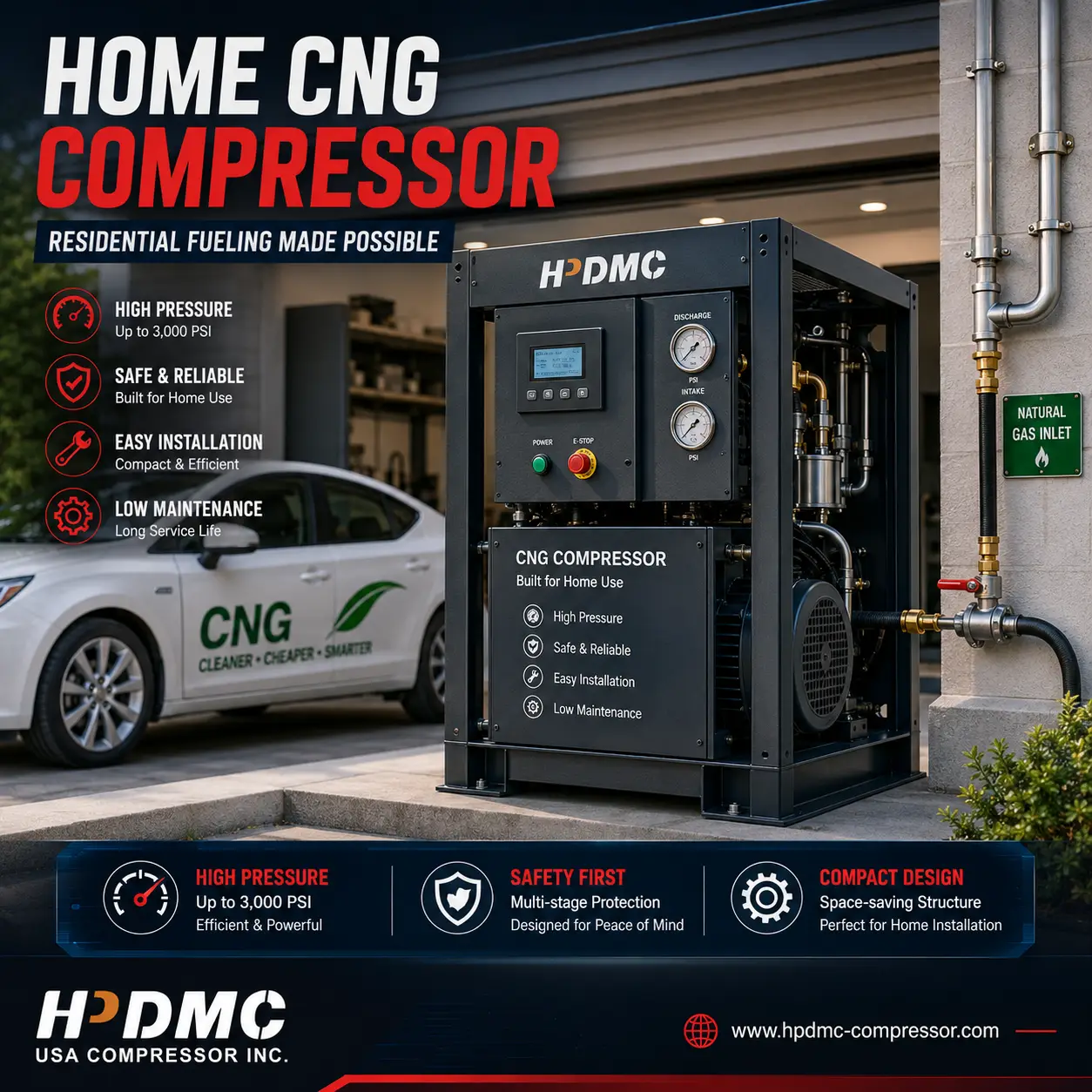
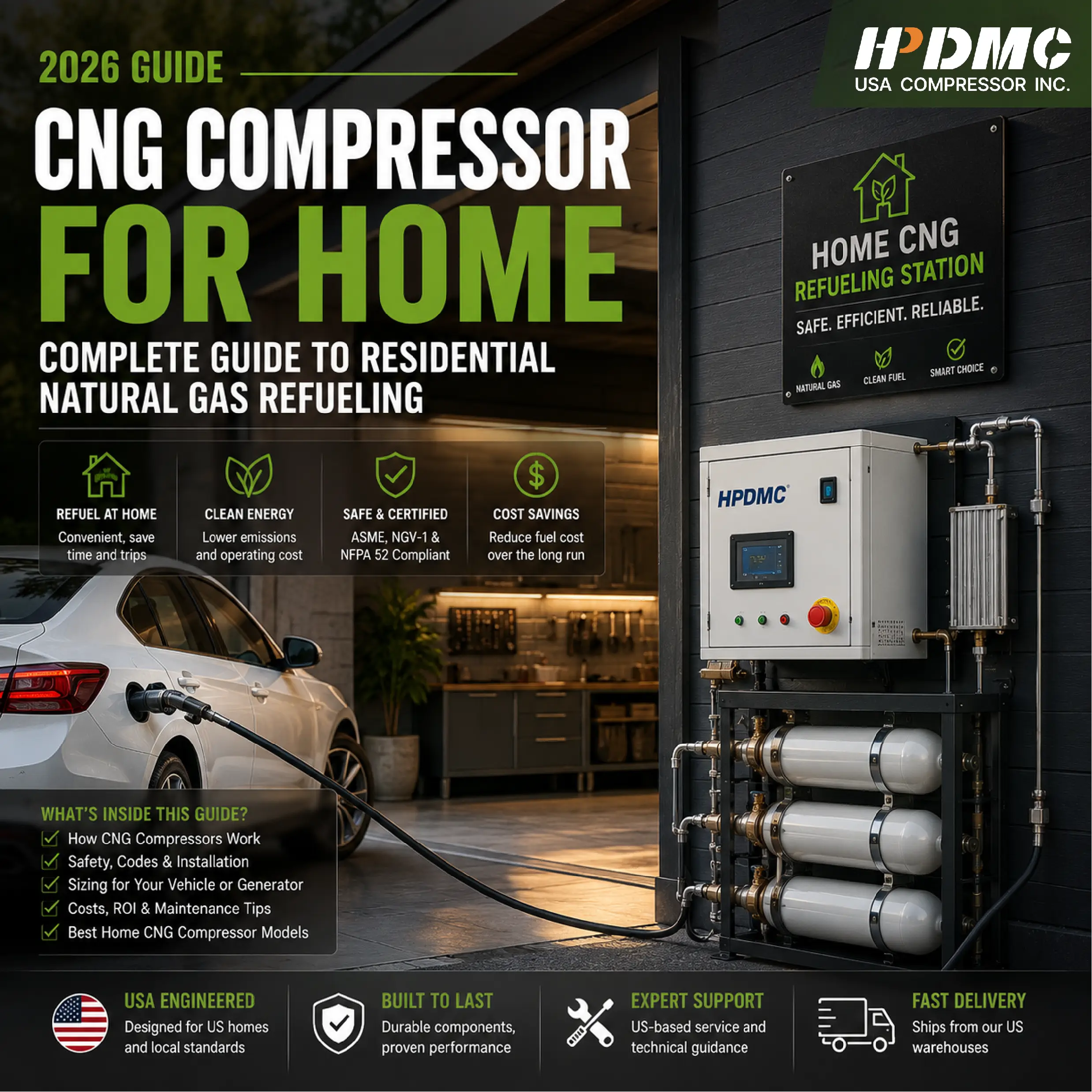
A home CNG compressor can provide a convenient way to compress natural gas for vehicle refueling where residential CNG fueling is permitted and the required infrastructure is available.
Unlike a conventional air compressor, a CNG compressor handles natural gas and operates at much higher pressures. Choosing the right system therefore requires more than comparing motor power or compressor size.
You need to consider the natural gas supply, required filling pressure, compression stages, flow rate, electrical supply, cooling, safety systems, installation environment, and compatibility with the vehicle and fueling equipment.
In this guide, we'll explain how a home CNG compressor works, what to consider before purchasing one, and how to determine whether a residential CNG fueling system is suitable for your application.
⚠️ Important Note: This guide provides general information about home CNG compressor selection. Always consult the manufacturer's specifications, local codes, utility requirements, and qualified installation professionals before purchasing or installing any CNG equipment.
A home CNG compressor is a specialized compressor designed to take natural gas from a lower-pressure supply and compress it to the high pressure required for compressed natural gas vehicle fueling.
📖 The U.S. Department of Energy's Alternative Fuels Data Center notes that home vehicle fueling can be possible with a small fueling appliance, while CNG fueling infrastructure must be designed around the required pressure, storage, compressor capacity, and intended use.
A home CNG system may include:
● Natural gas supply connection
● CNG compressor
● Multi-stage compression system
● Cooling system
● Pressure controls
● Safety protection
● High-pressure piping and connections
● Fueling hose and connector
● Vehicle-compatible fueling equipment
⚠️ The compressor is therefore only one part of the complete fueling system.
A typical home CNG fueling system follows several basic steps.
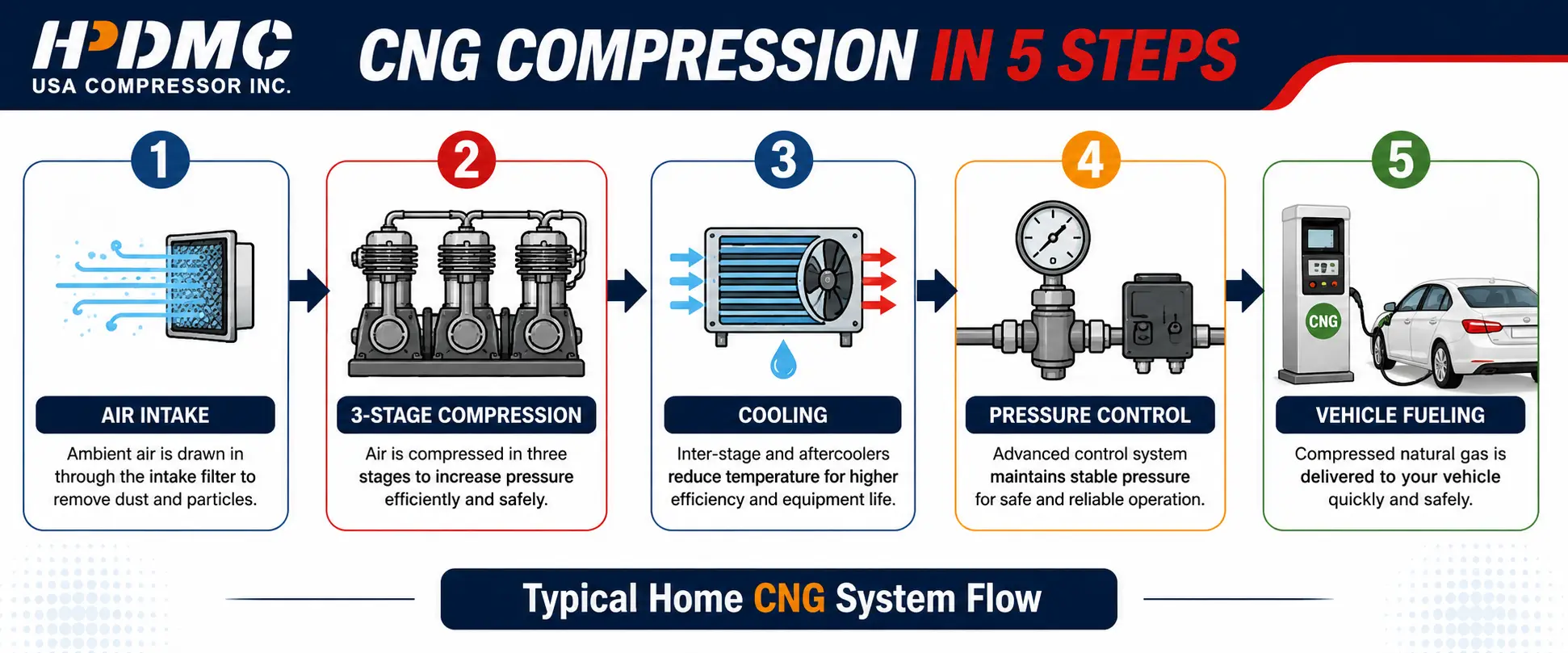
📖 The U.S. Department of Energy notes that CNG fueling systems commonly use pressure-based filling and that temperature affects the final amount of gas stored in the vehicle tank.
Pressure is one of the most important specifications when selecting a home CNG compressor.
📖 The U.S. Department of Energy's Alternative Fuels Data Center states that 3,600 PSI is a typical industry-standard CNG fueling pressure, while some systems use 3,000 PSI.
The correct pressure depends on:
● Vehicle fuel system
● Vehicle tank rating
● Fueling equipment
● Compressor design
● Ambient temperature
● Applicable codes and regulations
⛔ Do not use a CNG compressor based solely on its maximum pressure rating. Always match the compressor and fueling equipment to the vehicle manufacturer's requirements and applicable local requirements.
Choosing a residential CNG compressor requires evaluating the complete application.
✔ Check Natural Gas Supply: Available pressure, supply capacity, gas quality, connection requirements, and utility approval.
✔ Determine Filling Pressure: Vehicle fuel system determines required pressure — match compressor to vehicle and fueling system.
✔ Consider Flow Rate: How quickly does the system need to fill? Time-fill vs fast-fill determines compressor size.
✔ Check Compression Stages: Multi-stage compression (typically 3-stage) manages temperature and pressure rise effectively.
✔ Evaluate Cooling System: Cooling capacity must match compressor flow rate and operating cycle for stable performance.
✔ Verify Electrical Supply: Check voltage, phase, frequency, motor power, and dedicated circuit requirements.
✔ Confirm Installation Requirements: Location, ventilation, piping, electrical, safety systems, codes, and local authority approval.
💡 HPDMC's published home CNG compressor information describes operation with an inlet pressure as low as 0.5 PSI. However, the actual required inlet conditions should always be verified for the specific model and installation.
A small home system may be designed for overnight or extended-duration filling rather than fast public-station-style fueling.
📖 The U.S. Department of Energy describes time-fill systems as applications where vehicles can be filled over an extended period, often overnight, while the compressor supplies gas directly to the vehicle.
For a home application, ask:
● How many vehicles will be fueled?
● How frequently will they be refueled?
● How much CNG does each vehicle require?
● Is overnight filling acceptable?
● Is faster fueling actually necessary?
⚠️ A larger compressor is not always the best choice if your application does not require fast filling.
Review gas supply, electrical, ventilation, installation, and local-code considerations in HPDMC's home CNG compressor guide.
👉 Explore Home CNG Compressor SolutionsA home CNG compressor and a commercial CNG fueling system may have very different requirements.
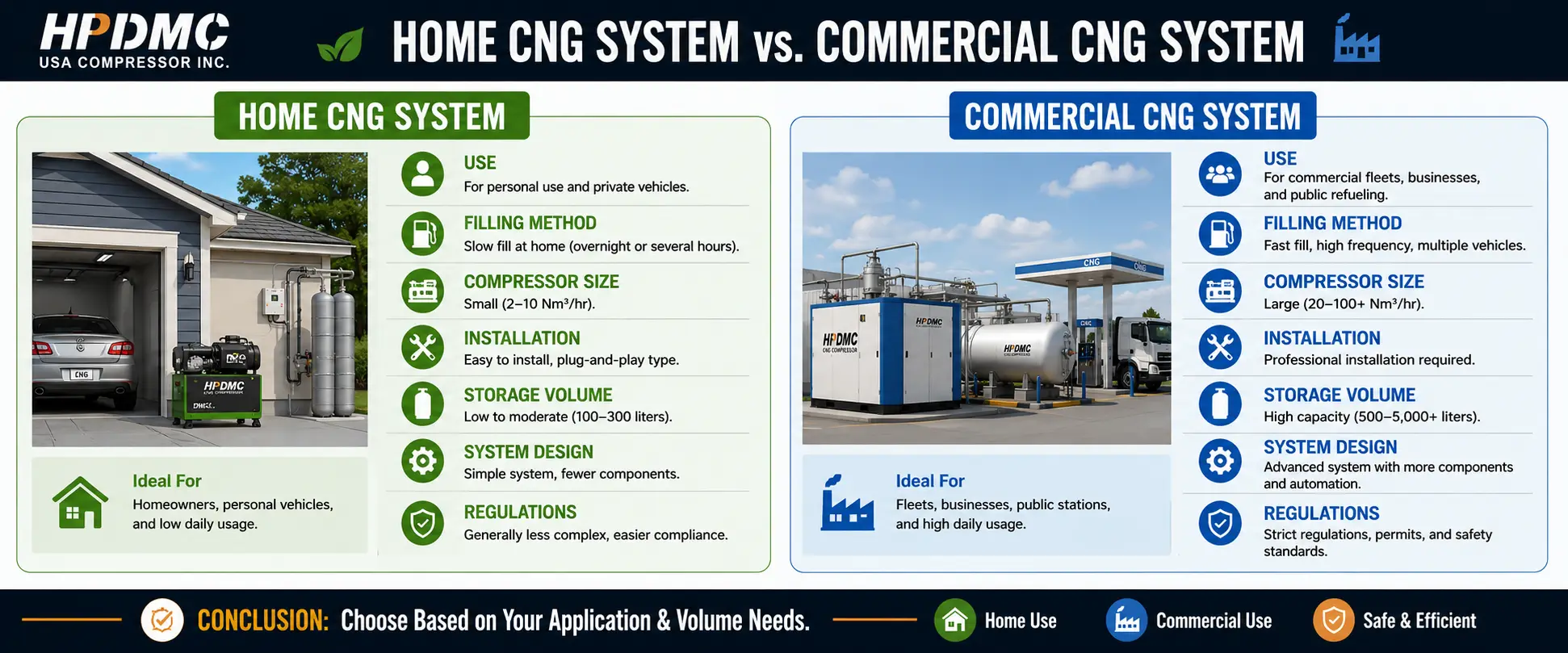
A home CNG compressor should not be treated like an ordinary household appliance.
⛔ Natural gas is flammable, and CNG systems involve high-pressure gas. Safety depends on the complete system — compressor, piping, valves, connections, controls, vehicle fueling equipment, installation environment, and operating procedures.
📖 For U.S. installations, NFPA materials specify that residential CNG fueling appliances should be listed to the applicable residential fueling appliance standard and installed according to the manufacturer's instructions; CNG fueling systems are addressed by NFPA 52.
⛔ A home CNG compressor should only be installed and operated where it is legally permitted and in accordance with applicable codes, utility requirements, equipment instructions, and qualified installation practices.
When evaluating a home CNG compressor, look for appropriate safety systems rather than focusing only on compressor performance.
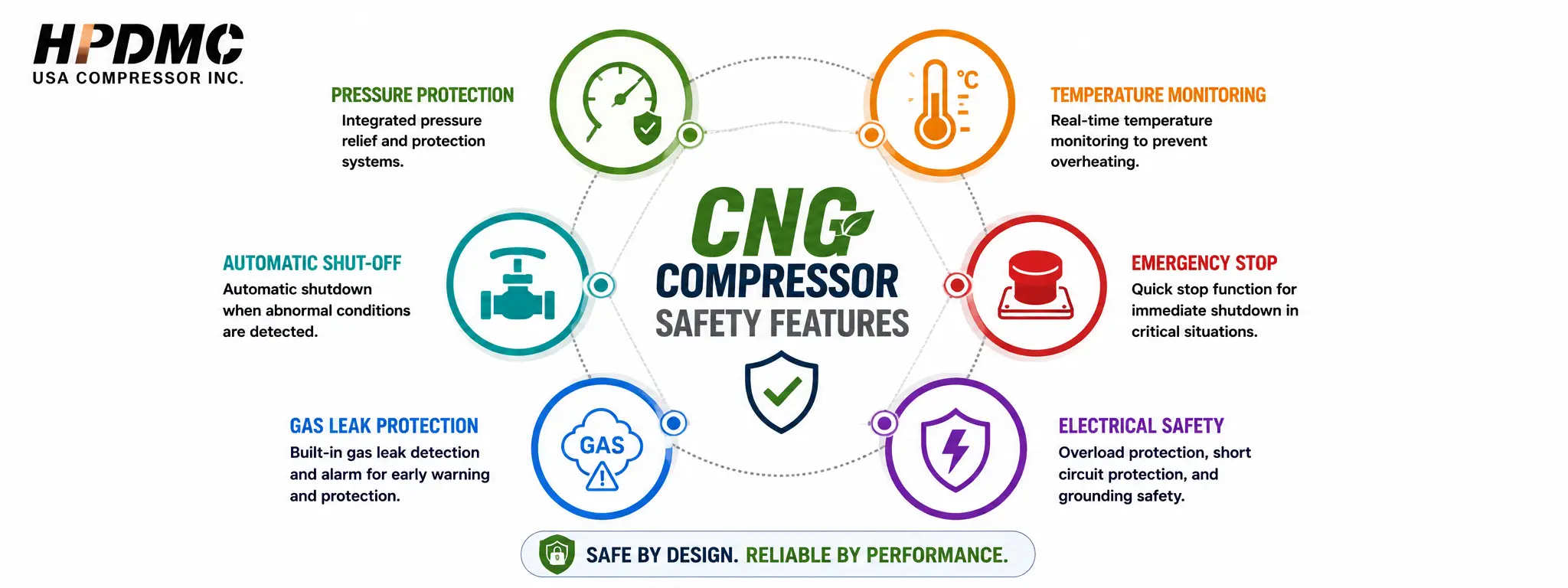
⚠️ The exact protection package varies by compressor and installation. Always verify the actual equipment specifications rather than assuming that every home CNG compressor includes the same safety features.
This is one of the most common questions about home CNG compressors.
The answer is not simply yes or no.
Whether a CNG fueling appliance can be installed in a garage or other residential location depends on:
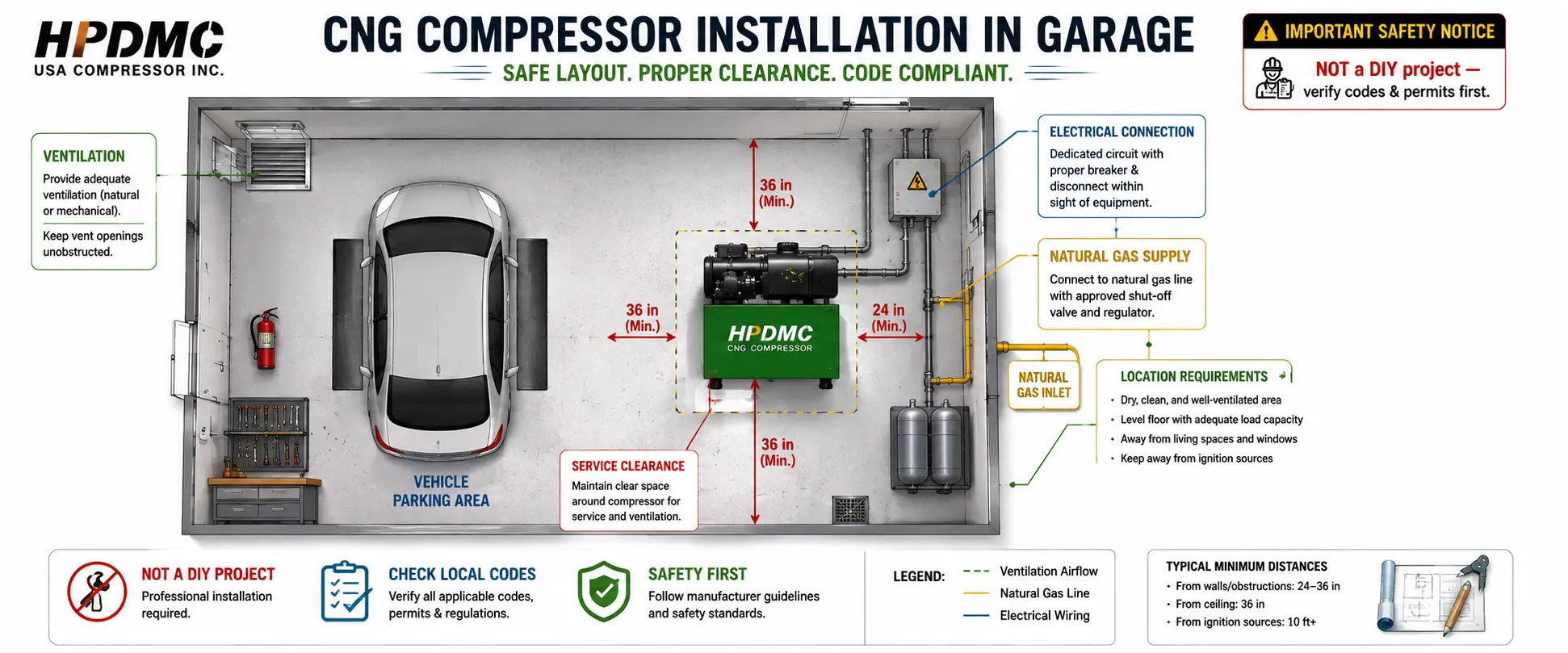
⛔ You should never install a CNG compressor in a garage simply because the unit is compact or marketed for home use. Confirm the installation requirements with the equipment manufacturer, qualified installer, local authority having jurisdiction, and natural gas utility before installation.
A CNG compressor requires regular inspection and maintenance.
Depending on the compressor design, maintenance may include:
✔ Checking connections
✔ Inspecting hoses and fittings
✔ Checking pressure indicators
✔ Inspecting cooling components
✔ Cleaning ventilation areas
✔ Checking filters
✔ Inspecting seals
✔ Monitoring operating temperature
✔ Following recommended service intervals
⛔ Never substitute a generic air-compressor maintenance schedule for the manufacturer's CNG compressor maintenance instructions. CNG equipment operates under different conditions from conventional compressed-air equipment.
A home CNG compressor may be worth considering if:
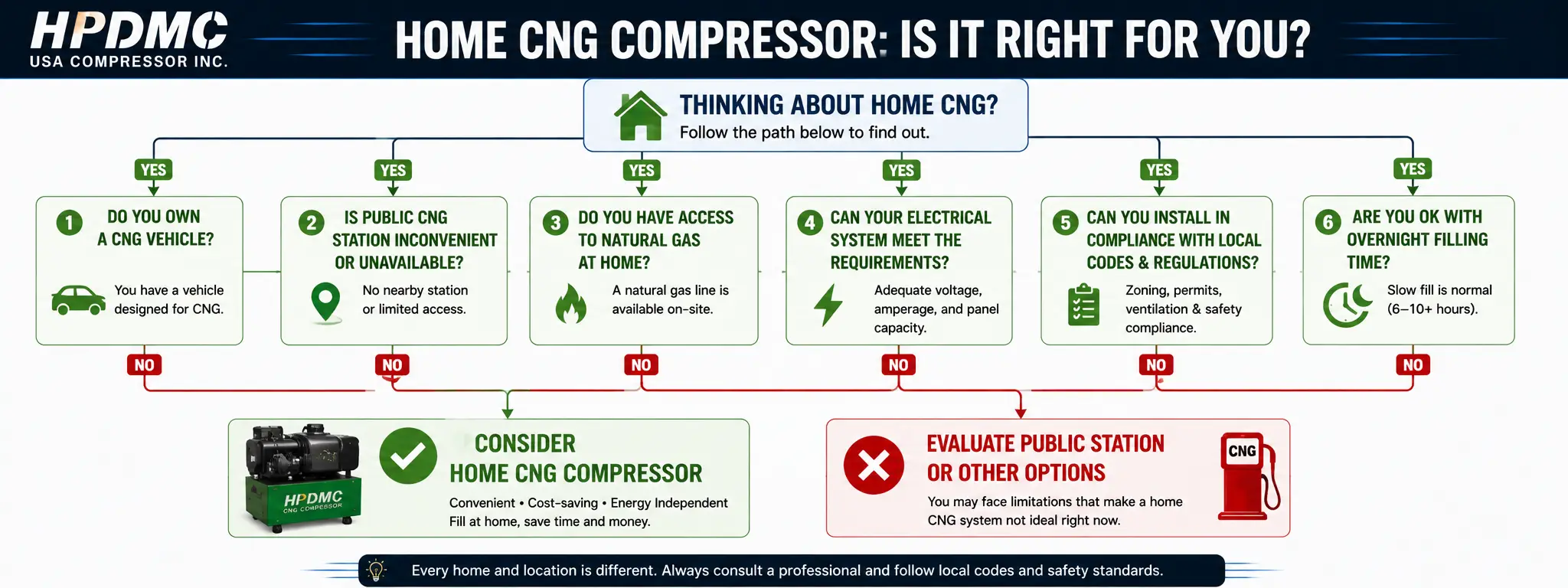
A residential CNG fueling appliance can be possible where permitted and where the required equipment, natural gas supply, installation conditions, and regulatory requirements are satisfied. The U.S. Department of Energy notes that home vehicle fueling can be possible with a small fueling appliance. However, a home CNG compressor should not be installed as a DIY project without confirming applicable requirements with the manufacturer, local authority, and utility provider.
Filling time depends on compressor flow rate, vehicle tank size, gas supply conditions, starting pressure, and the filling method. Time-fill systems can take significantly longer than fast-fill systems and may be designed for overnight operation — typically 6–12 hours for a full fill, depending on tank size and compressor capacity.
3,600 PSI is a common CNG fueling pressure in the United States, while 3,000 PSI systems are also used. The correct pressure depends on the vehicle fuel system, vehicle tank rating, and fueling equipment. Always match the compressor to the vehicle manufacturer's requirements — never use a compressor based solely on its maximum pressure rating.
No. An air compressor is designed to compress air, while a CNG compressor is specifically designed for natural gas and high-pressure CNG applications. The equipment, materials, controls, safety systems, and installation requirements are completely different. CNG compressors operate at much higher pressures (3,000–3,600 PSI vs 100–200 PSI for typical air compressors) and require specialized safety systems for flammable gas handling.
This depends on local building and fire codes, equipment listing, manufacturer installation instructions, ventilation, electrical requirements, natural gas utility requirements, and local authority approval. NFPA materials specifically address residential fueling appliances and require applicable listing and installation according to manufacturer instructions. Never install a CNG compressor in a garage simply because the unit is compact — confirm all requirements with qualified professionals before installation.
Home CNG compressor costs vary significantly based on flow rate, pressure capability, compression stages, cooling system, and included safety features. In addition to the compressor itself, buyers should budget for installation, gas line connection, electrical work, and permits. Always obtain complete system pricing rather than comparing base compressor costs alone.
Maintenance requirements vary by model but typically include: checking connections, inspecting hoses and fittings, checking pressure indicators, inspecting cooling components, cleaning ventilation areas, checking filters, inspecting seals, and monitoring operating temperature. Never substitute a generic air-compressor maintenance schedule for the manufacturer's CNG compressor maintenance instructions. Always follow the schedule specified for your exact model.
A home CNG compressor can be safe when properly installed, operated, and maintained in accordance with manufacturer instructions and applicable codes. However, natural gas is flammable and CNG systems involve high-pressure gas. Safety depends on the complete system — not just the compressor. Key safety features include pressure protection, temperature monitoring, emergency shutdown, automatic shutoff, gas leak protection, and electrical safety. Always have the system installed by qualified professionals and follow all maintenance requirements.
Looking for a home CNG compressor? This guide helps you review gas supply, electrical requirements, pressure, ventilation, and installation conditions before requesting a custom quote.
Check Home CNG Availability & Pricing1-Year Warranty
Easy Returns
US-Based Support
Lifetime Technical Support
Help & Advice
service@sales.hpdmc-compressor.com
Live Help
(888)598-0133



Find the Right Compressor for Your Needs
Find the Right Compressor for Your Needs