

1-Year Warranty
Easy Returns

US-Based Support
Lifetime Technical Support

Help & Advice
service@sales.hpdmc-compressor.com

Live Help
(888)598-0133
Quiet Air Compressor: How To Choose A Low-Noise Model
If you work in a home garage, workshop, studio, or indoor workspace, compressor noise can be just as important as CFM and PSI.
A quiet air compressor can make your workspace more comfortable, reduce disruption, and make it easier to work near the compressor for longer periods. However, choosing a low-noise model involves more than simply looking for the lowest advertised decibel rating.
Pump design, motor speed, compressor technology, vibration control, airflow requirements, and duty cycle can all affect the overall operating experience.
In this guide, we'll explain what makes an air compressor quiet, how to understand compressor noise levels, and how to choose the right low-noise compressor for your application.
1. What Makes An Air Compressor Quiet?
Air compressor noise comes from several sources, including the motor, pump, airflow, vibration, and mechanical components.
A compressor with a quiet motor is not necessarily a quiet compressor if the pump or vibration system produces significant noise. When comparing models, consider the complete compressor design.
Motor Speed
Motor speed can affect both noise and vibration. A lower-speed motor may produce a more comfortable operating environment because it can reduce mechanical noise and vibration compared with higher-speed designs.
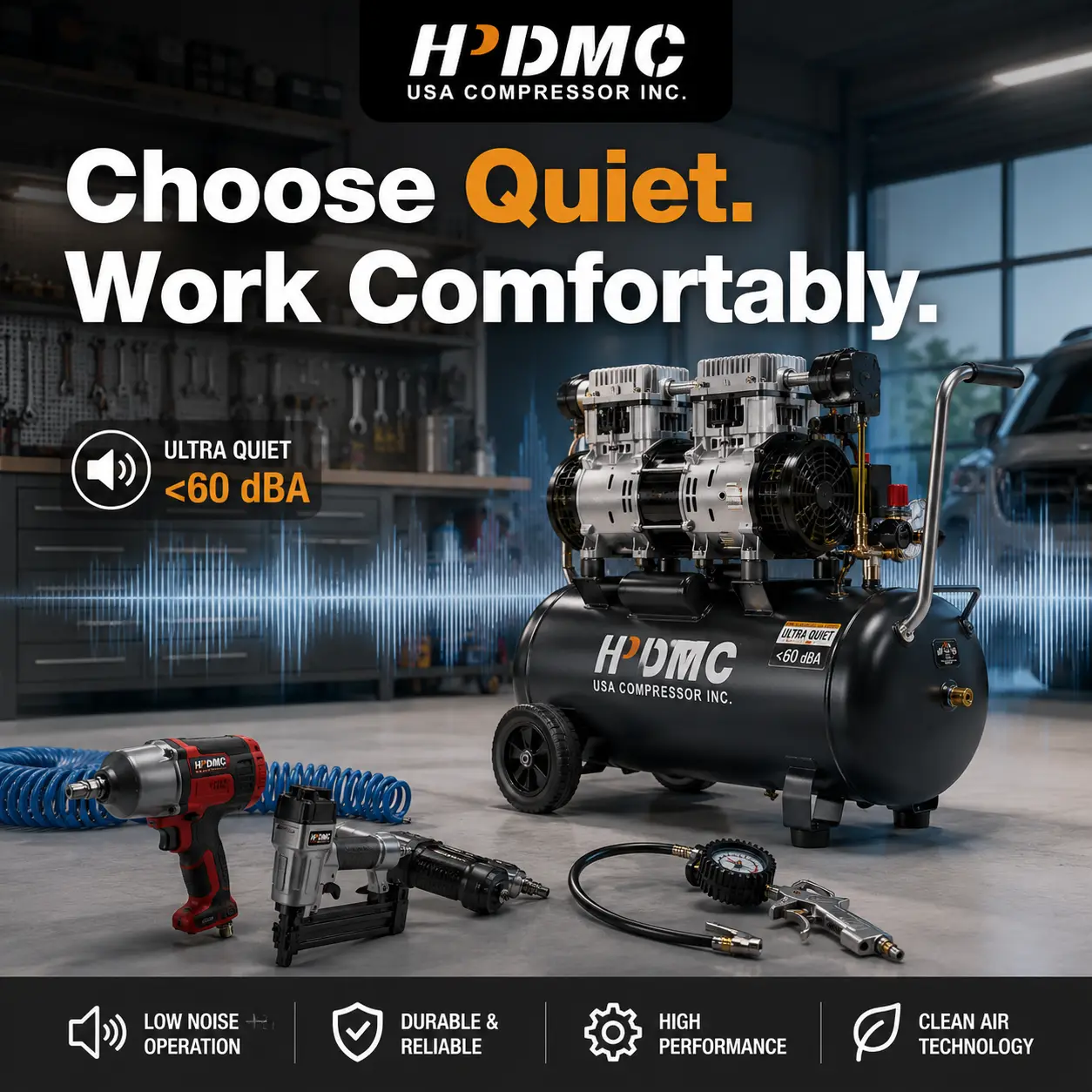
💡 Example: HPDMC's ultra-quiet portable oil-free compressor uses a 1700 RPM motor and is designed for low-noise operation.
Pump Design
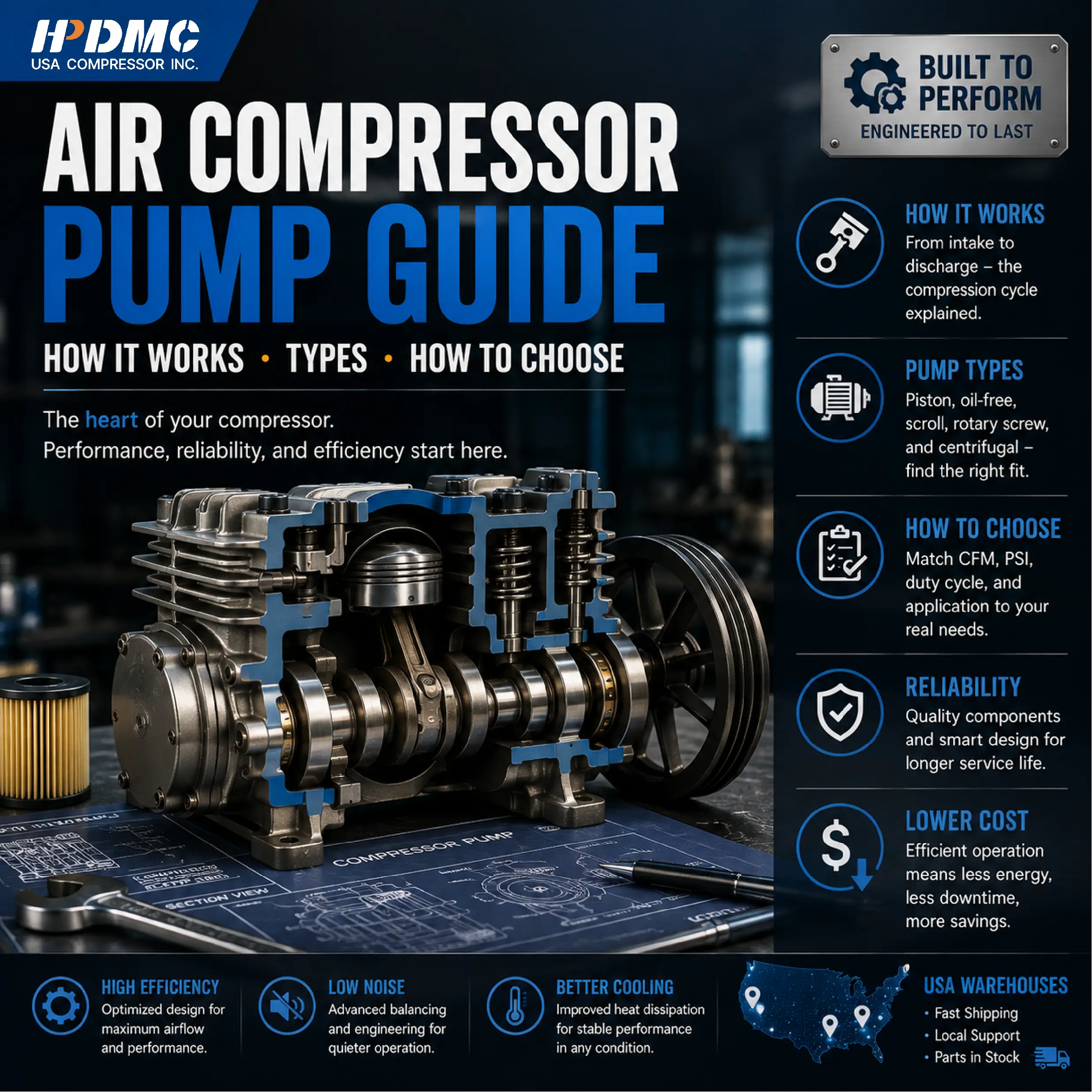
The pump is another major source of compressor noise. Traditional reciprocating piston compressors can produce noticeable mechanical sound because the pistons move continuously during operation.
Vibration Control
Mechanical vibration can make a compressor feel and sound louder than expected. Features such as anti-vibration feet, stable tank construction, balanced pump design, belt-driven systems, and sound enclosures can help reduce transmitted vibration.
2. What Is A Good Noise Level For An Air Compressor?
Air compressor noise is typically measured in decibels (dBA). The lower the dBA rating, the quieter the compressor.
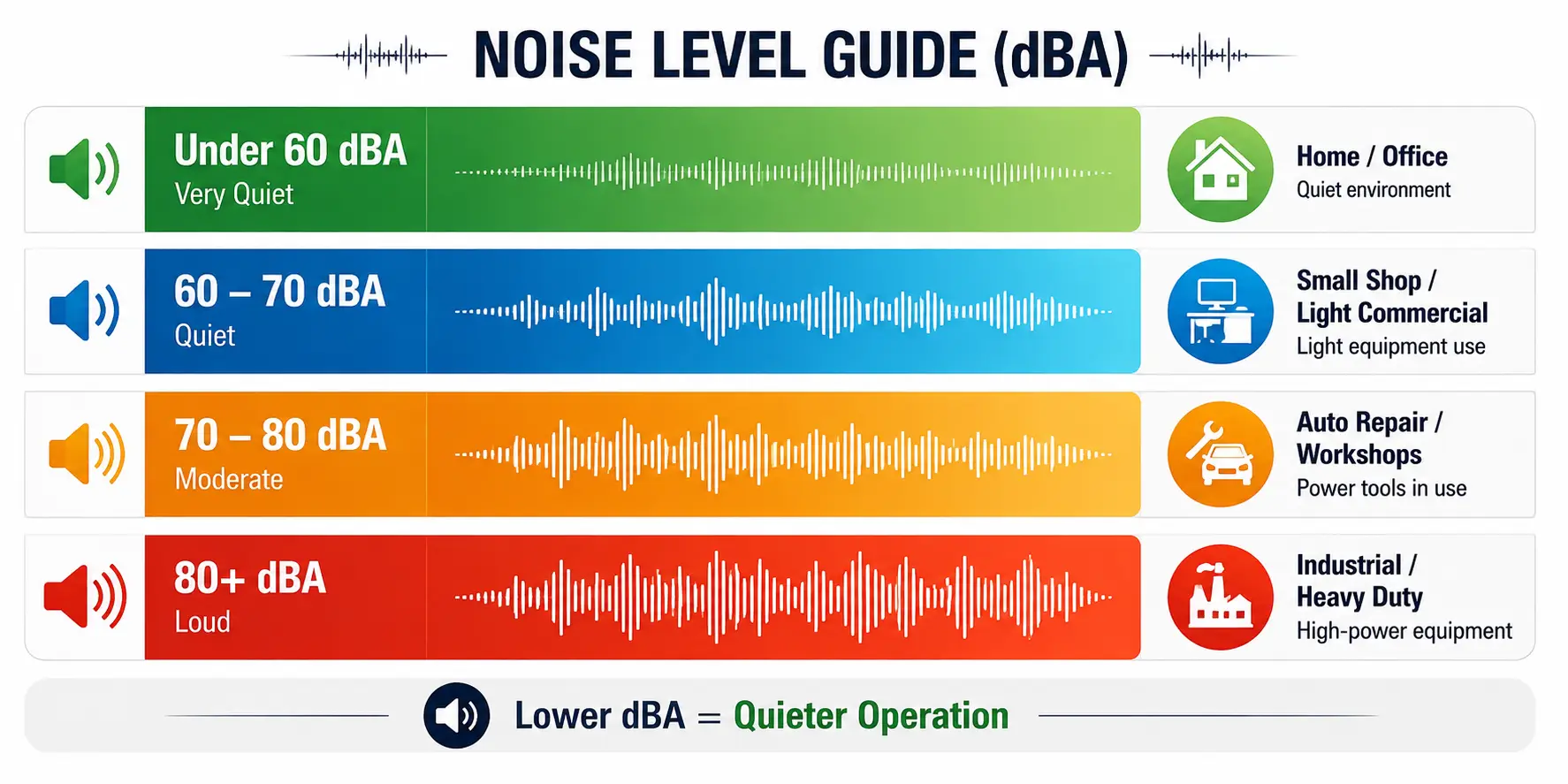
⚠️ These ranges should be treated as general guidance rather than universal industry standards. Actual perceived noise can vary depending on measurement distance, installation, room acoustics, workload, and compressor design. Always check the manufacturer's stated noise level and testing conditions.
3. How Quiet Is Quiet Enough?
The right noise level depends on where you plan to use the compressor.
🏠 Quiet Air Compressor For Home Garage
For a home garage, noise can be a major consideration. You may be working close to the compressor, sharing walls with living spaces, or operating the compressor in the evening.
Look for: Low dBA rating, oil-free or low-maintenance design, anti-vibration feet, compact construction, appropriate tank capacity, enough CFM for your tools.
🔧 Quiet Air Compressor For Workshops
Professional workshops may need more airflow than a typical home garage. Don't choose a compressor based on noise alone — also consider CFM, PSI, duty cycle, tank capacity, power supply, and tool requirements.
The goal: Find the best balance between noise, airflow, reliability, and operating requirements.
🏭 Quiet Air Compressor For Industrial Applications
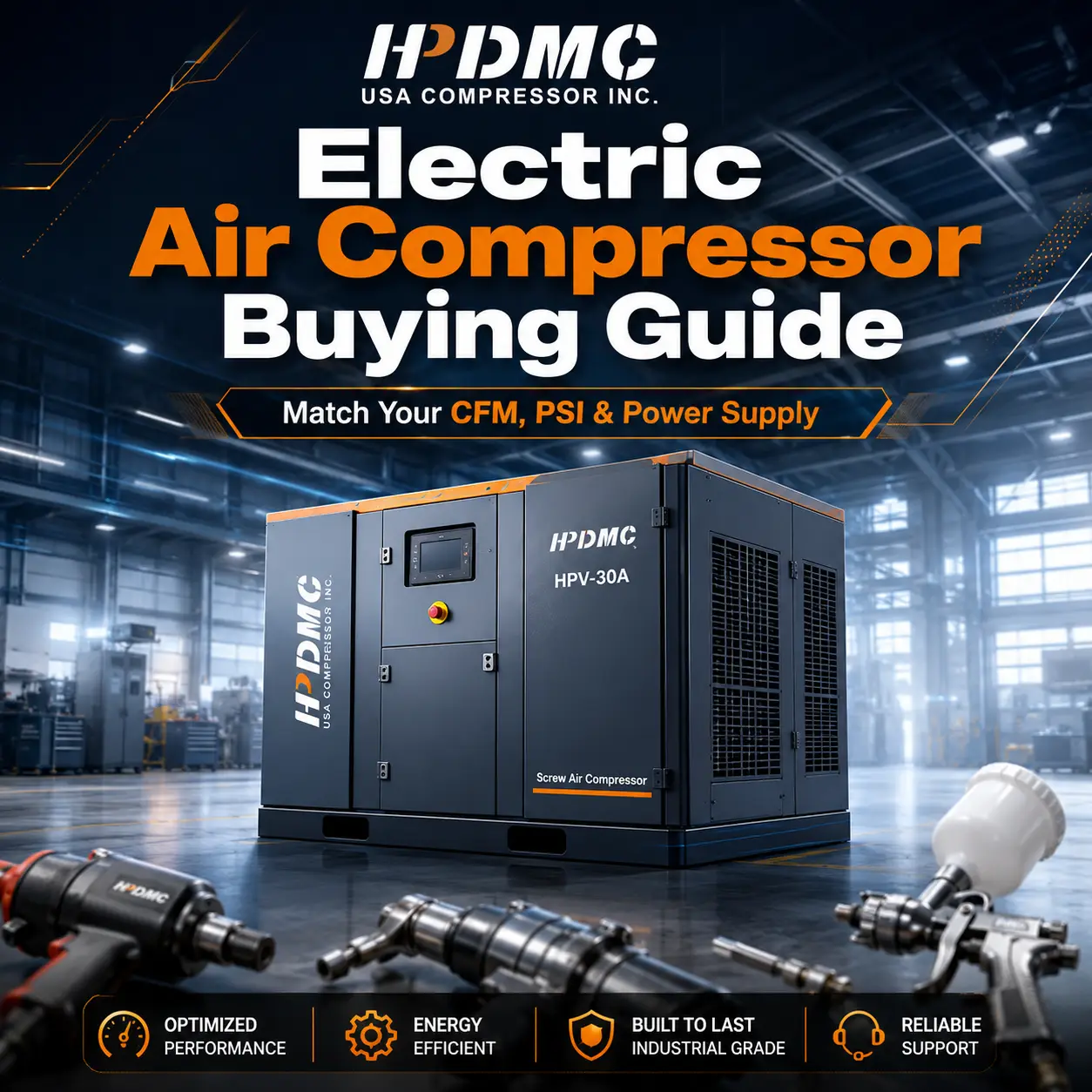
For industrial environments, continuous air supply is usually more important than achieving the lowest possible noise level. Rotary screw compressors are commonly used where compressed air demand is continuous or relatively steady.
Consider: Continuous-duty capability, CFM, operating pressure, energy efficiency, sound enclosure, installation requirements, maintenance access.
4. Quiet Air Compressor Technologies Compared
Different compressor technologies can produce different operating characteristics.
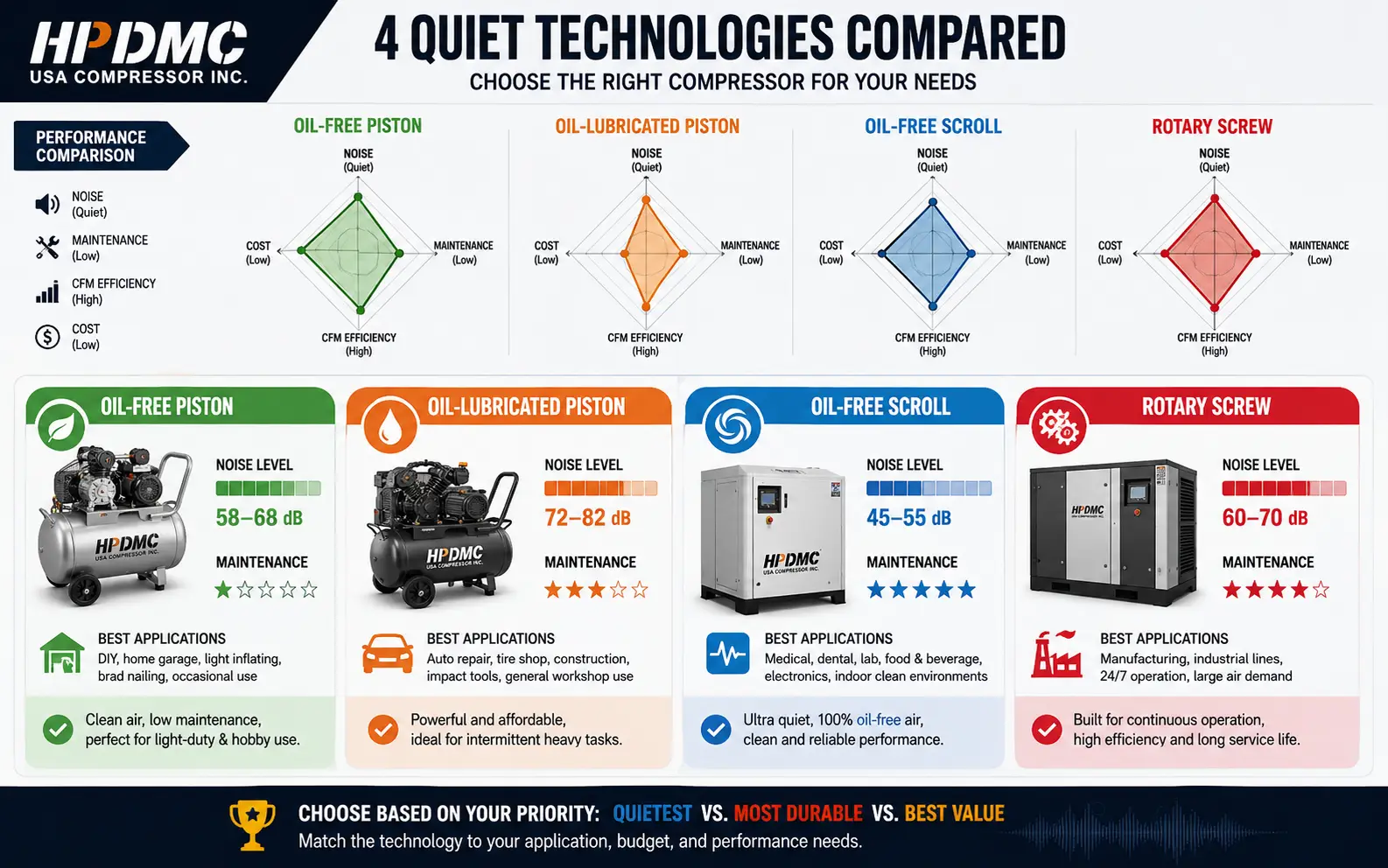
💡 Note: The actual noise level depends on the specific compressor model and design. HPDMC's oil-free scroll technology uses two spiral elements that compress air without contact between the scrolls, eliminating the need for lubrication in the compression process. The OSC series is available from 2 to 30 HP for different professional applications.
5. How To Choose A Quiet Air Compressor — 5 Steps
Choosing the right quiet compressor starts with your actual application.
Determine Your CFM: A quiet compressor still needs to provide enough airflow for your tools. Size around your highest-demand tool — or combined demand if running multiple tools.
Check Required PSI: Most workshop tools operate at 90 PSI. Compare CFM at the working PSI you need — not just maximum PSI.
Consider Duty Cycle: Intermittent use (nailers, DIY) → piston. Extended/continuous use (production, spray equipment) → rotary screw.
Select Tank Size: Larger tanks reduce cycling frequency. 20–30 gal for garages, larger for higher-demand applications. Don't use tank size to compensate for low CFM.
Verify Power Supply: Check voltage, phase, frequency, amperage, and available capacity before ordering.
CFM Requirements by Tool Type
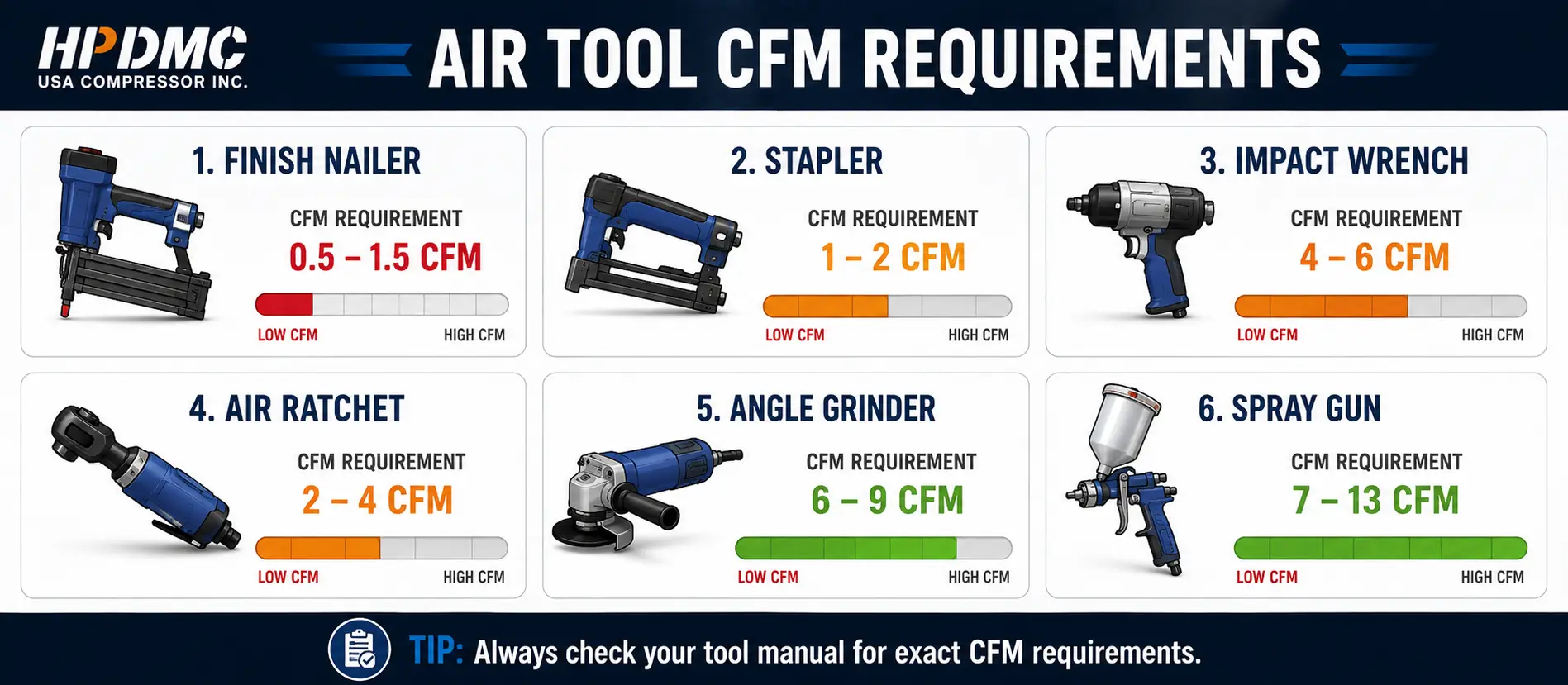
※ Exact CFM requirements vary by tool manufacturer — always check your equipment specifications.
6. Quiet Air Compressor For Pneumatic Tools
A common misconception is that choosing a quiet compressor means sacrificing performance. That is not necessarily true. The important factor is to match noise level + CFM + PSI + duty cycle to your tools.
📌 Example Product Reference
HPDMC's ultra-quiet portable oil-free compressor provides:
- 2.0 HP / 1.5 kW motor
- 115 PSI maximum pressure
- 5.2 CFM @ 40 PSI / 4.0 CFM @ 90 PSI
- 11-gallon tank
- 1700 RPM motor
- Ultra-quiet operation below 60 dBA
This combination makes it suitable for tire inflation, cleaning, nailers, staplers, light-duty impact wrenches, and other intermittent pneumatic tools.
7. Quiet Oil-Free Air Compressor: Why Choose One?
Oil-free compressors can be particularly attractive when low maintenance and cleaner air are important.
🛠️ Low Maintenance
No regular oil replacement required inside the compression chamber.
💨 Cleaner Air
Oil-free compression helps minimize the risk of oil contamination.
🔇 Low-Noise Options
Some oil-free compressors are specifically engineered for quiet operation.
🏠 Suitable For Indoor
Compact oil-free compressors work well in garages, workshops, and other indoor environments.
⚠️ Important: Buyers should still compare the actual dBA rating rather than assuming every oil-free compressor is quiet.
8. Quiet Air Compressor For Garage: What To Look For
If you're choosing a compressor for a home garage, prioritize these specifications:
🔇 Low Noise — Look for a compressor designed for low-noise operation, especially if your garage is attached to your home.
💨 Enough CFM — Make sure the compressor can support your most demanding pneumatic tool.
🛢️ Appropriate Tank — Choose enough storage capacity for your typical work without unnecessarily increasing the size.
📐 Compact Design — A smaller footprint can make a major difference in a garage.
🛠️ Easy Maintenance — Oil-free models can reduce routine maintenance requirements.
⚡ Suitable Power — Make sure your garage electrical circuit can safely support the compressor.
9. How To Reduce Air Compressor Noise
Even a quiet compressor can become noticeably louder if it is installed incorrectly. Here are several practical ways to reduce operating noise.
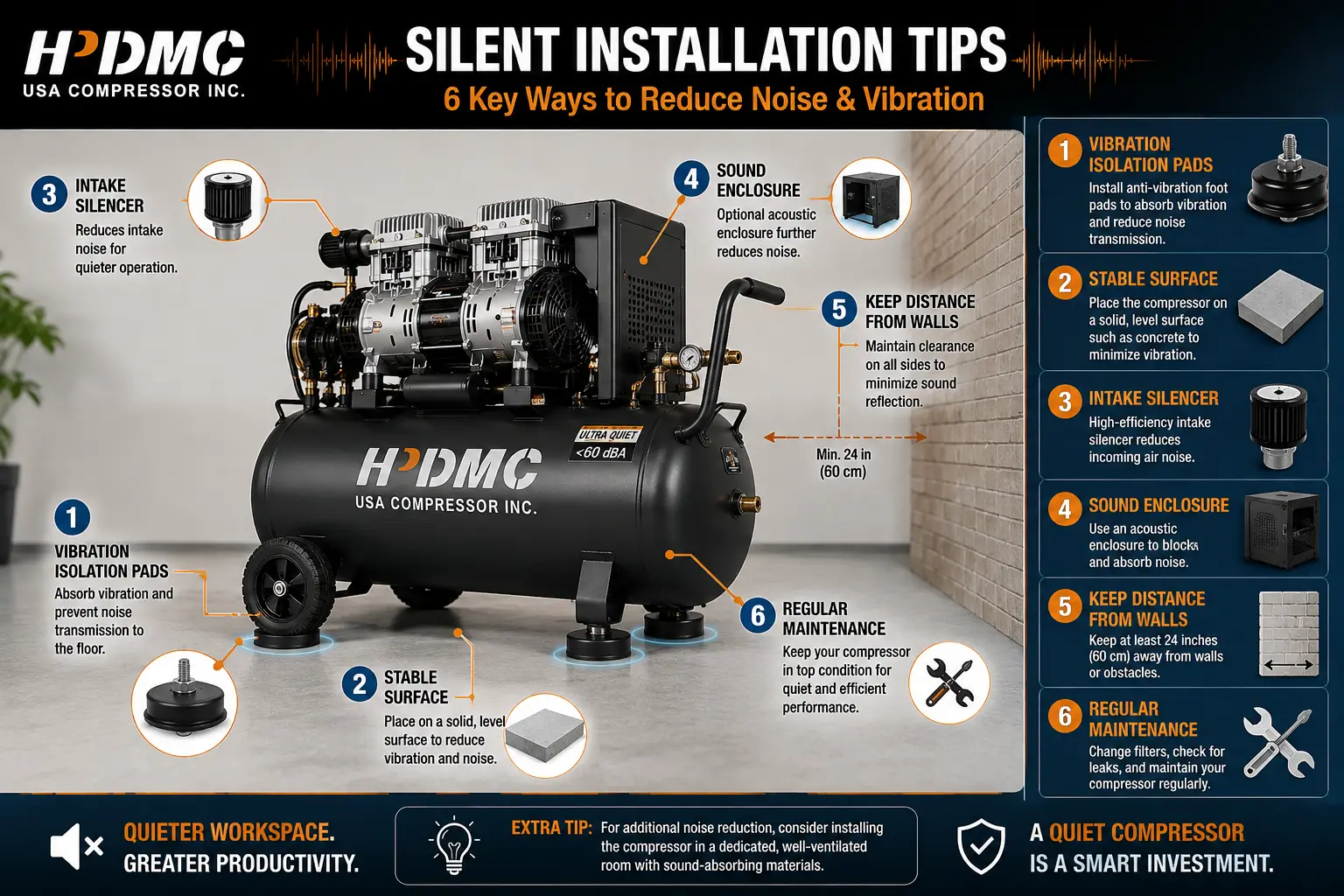
🏗️ Stable Surface: Place on a stable surface to reduce unwanted vibration. Avoid resonant surfaces.
🦶 Anti-Vibration Feet: Use anti-vibration feet to reduce the transmission of mechanical vibration into the floor.
💨 Proper Ventilation: Do not block ventilation openings — overheating affects performance and equipment life.
🔧 Regular Maintenance: Dirty filters, worn components, and loose fittings can increase noise. Maintain regularly.
💡 Bonus Tip: Position the compressor away from walls shared with bedrooms, offices, or other occupied spaces.
10. Quiet Air Compressor Buying Checklist
🔇Noise Level: Check the manufacturer's dBA rating and measurement conditions.
💨CFM: Make sure airflow meets the requirements of your tools.
🎚️PSI: Confirm that the compressor provides sufficient working pressure.
⚙️Compressor Type: Consider piston, oil-free, scroll, or rotary screw technology.
🛢️Tank Capacity: Choose a tank that matches your workload and operating pattern.
🔌Power Supply: Verify voltage, phase, frequency, and available capacity.
⏱️Duty Cycle: Determine whether you need intermittent or continuous operation.
📐Installation Space: Consider footprint, ventilation, service access, and noise transmission.
Frequently Asked Questions About Quiet Air Compressors
What is considered a quiet air compressor?
Generally, any compressor rated under 70 dBA is considered quiet, while models under 60 dBA are considered ultra-quiet. For reference, normal conversation is about 60 dBA, and a typical piston compressor operates at 75–85 dBA. When comparing models, always check the manufacturer's dBA rating and testing conditions — not all decibel measurements are taken at the same distance or under the same load.
How many decibels is a quiet air compressor?
A quiet air compressor typically falls in the 60–70 dBA range. Ultra-quiet models can operate below 60 dBA. For comparison: 50 dBA is a quiet office, 60 dBA is normal conversation, 70 dBA is a vacuum cleaner, and 80+ dBA is noticeably loud. HPDMC's ultra-quiet oil-free portable compressor operates below 60 dBA, making it suitable for noise-sensitive environments like home garages and studios.
Are oil-free air compressors quieter than oil-lubricated?
Not necessarily. While many oil-free compressors are designed for quiet operation, noise depends on the complete design — pump type, motor speed, vibration isolation, and enclosure. Some oil-lubricated belt-drive piston compressors (70–78 dBA) can be quieter than direct-drive oil-free models (80–90 dBA). The key is to check the actual dBA rating rather than assuming oil-free equals quiet. HPDMC's oil-free scroll technology, however, is specifically engineered for low-noise, clean-air applications.
What is the quietest type of air compressor?
Oil-free scroll compressors are among the quietest, often operating below 60 dBA. They use two spiral elements that compress air without metal-to-metal contact, eliminating much of the mechanical noise found in piston designs. Rotary screw compressors with sound-dampening enclosures (65–75 dBA) are also relatively quiet and are suitable for continuous industrial use. For home garage use, ultra-quiet oil-free piston compressors with low RPM motors (like HPDMC's 1700 RPM model) provide an excellent balance of low noise and portability.
Can I use a quiet air compressor for impact wrenches and grinders?
Yes, but you must match the CFM requirement. Impact wrenches typically require 4–6 CFM at 90 PSI — a quiet compressor with 4–5 CFM can handle them intermittently. Die grinders and sanders require 6–8+ CFM continuously, which may exceed the capacity of small ultra-quiet models. For high-demand tools, look for a quiet compressor with adequate CFM output, or consider a rotary screw model with a sound enclosure for continuous high-CFM applications. Always check the CFM rating at 90 PSI, not just the noise level.
Why is my air compressor getting louder over time?
Gradual increase in noise often indicates wear or maintenance issues. Common causes include: (1) Worn bearings or connecting rods in the pump, (2) Loose fasteners or mounting bolts, (3) Dirty air filter causing the pump to work harder, (4) Low oil level (oil-lubricated models), (5) Misaligned or worn belts, (6) Carbon buildup on valves (from using automotive oil instead of compressor oil). If your compressor is getting louder, perform a thorough maintenance check immediately — what starts as noise can quickly become a catastrophic failure.
How can I make my existing air compressor quieter?
Several cost-effective solutions can reduce existing compressor noise: (1) Install anti-vibration pads under the feet to isolate floor vibration. (2) Build or buy a sound enclosure — line it with acoustic foam, but maintain ventilation for cooling. (3) Extend the intake with a hose and relocate the air filter to a quieter location (reduces intake noise). (4) Replace worn belts — glazed belts create noise. (5) Perform full maintenance — oil change, clean air filter, tighten fasteners. (6) Install a muffler on the intake or exhaust. Remember: never block cooling airflow — overheating causes far more damage than noise.
Need Help Choosing the Right Quiet Compressor?
Get a free, no-obligation application assessment from HPDMC's compressor experts — we'll match your noise, CFM, and PSI requirements to the right model.
✔️ Free consultation · ✔️ Application-matched recommendations · ✔️ 24‑hr shipping from LA/Chicago
1-Year Warranty
Easy Returns
US-Based Support
Lifetime Technical Support
Help & Advice
service@sales.hpdmc-compressor.com
Live Help
(888)598-0133



Find the Right Compressor for Your Needs
Find the Right Compressor for Your Needs